

An evidence-informed case-based module to help clinicians decode the overlapping symptoms related to lumbar pelvic and hip pathologies.




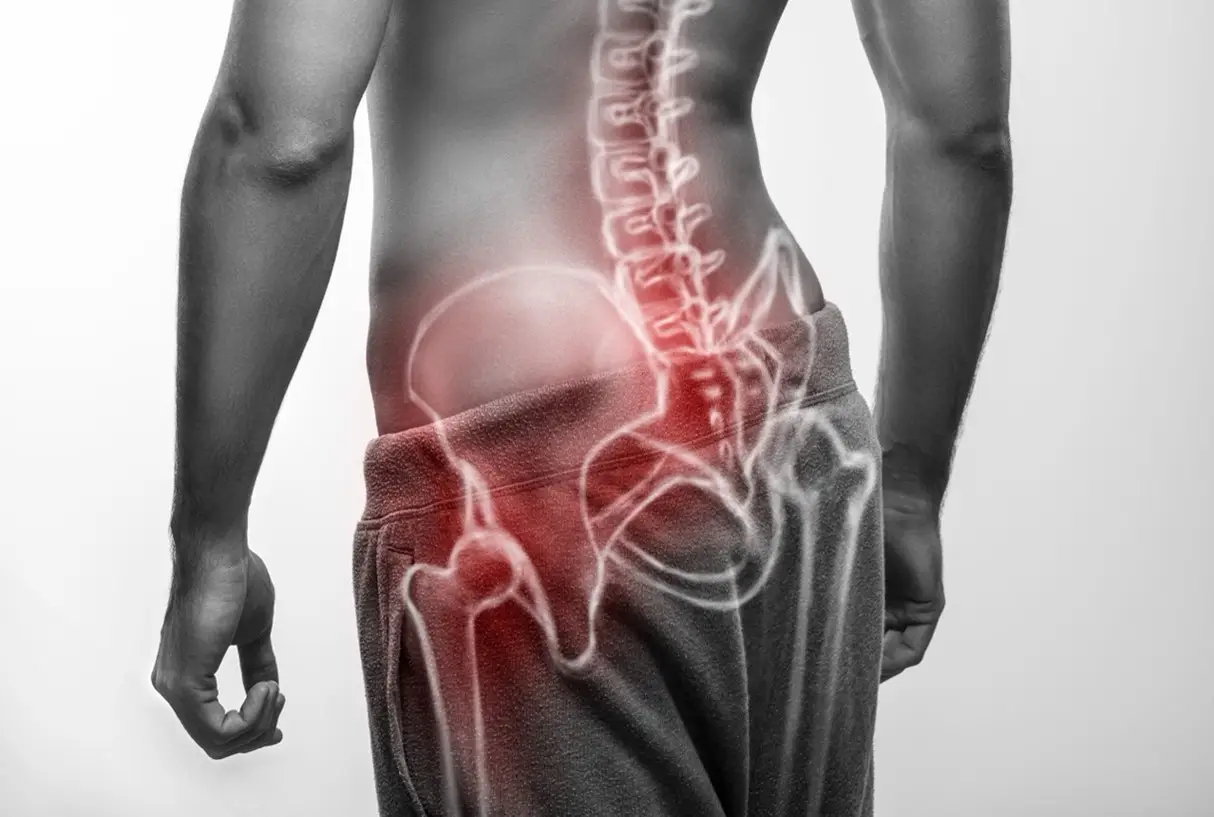
This module focuses on resolving the clinical “gray zones” where overlapping symptoms often lead to misdiagnosis. While most low back pain is non-specific, identifying the primary driver, whether lumbar, SIJ, or hip, is essential for effective treatment.
Failure to accurately differentiate these regions can result in:
You will learn:
Understanding “hip-spine syndrome” and overlapping pain regions.
Clinical indicators for mechanical, inflammatory, and centralized pain.
Why the buttock is the most common referral site for L3-S1 nerve roots and hip OA.
Practical pathways for identifying and managing urgent spinal conditions.
Current guidelines for non-specific low back pain treatment.
This module examines the connection between the lumbar spine, SIJ, and hip to help clinicians interpret overlapping pain patterns. It covers pain mechanism classification, referral patterns, red flag screening, and evidence-informed approaches to managing low back pain.

This module is essential for healthcare professionals responsible for the differential diagnosis of musculoskeletal presentations, including:
✔ Educational audio / video content
✔ Visual infographic reference
✔ Evidence-informed communication framework
✔ Practical clinical examples
✔ Lifetime access to purchased materials
Please email us at mskacademy25@gmail.com upon completion of the module to receive a “Certificate of Completion’
Your words influence how patients think, feel, and recover. This resource helps you communicate in ways that support safety, trust, and better outcomes.